TalkCarswell.com
Douglas Carswell's Blog
A new Conservative approach on the economy
For two years, the Coalition's approach to the economy has been to more or less carry on where Gordon Brown left off. The rhetoric, of course, has been sharply different. But the actual policies are little changed.
My evidence for making such a claim? The facts.
1. Reliance on monetary stimulus: Like the previous administration, the Coalition is relying on monetary stimulus (low interest rates and cheap credit) to drive growth.
2. Print-and-pray economics: In opposition, the Conservatives spoke against QE. In government, we're letting it happen.
3. Excessive spending and borrowing: Public spending is higher now than it was in Gordon Brown's last term of office. Assuming the bond bubble doesn’t burst, the Coalition is set to borrow more in five years than Gordon Brown managed during his entire time in office.
4. High taxes: Under Labour the tax burden grew. Despite a few tax tweaks, little has been done to change things.
5. More bailout-and-borrow: Gordon Brown's response to the financial crisis was to bailout first the banks, then the Eurozone. By extending loans to the IMF and Euro bailout fund, we're doing both.
If you run the economy like Gordon Brown, you end up with economic problems the way Gordon Brown did.
Ironically, the main critique of the Coalition’s economic policy made the BBC-types is pitched from the left. Ministers are frequently taken to task for not spending more, rather than spending too much. Monetary stimulus is wrong, runs the argument, not because it risks inflation, but because we need a fiscal stimulus, too.
This all suggests it is time for Conservative – and conservative – thinkers to consider an alternative economic strategy. Here are some suggestions to get the ball rolling;
Spend less; my constituents have to work out how much money they have coming in each month - then work out what they can afford to spend. Government must start to do the same. Instead of taxing us in order to raise the money it decides it must spend, government should spend what the tax base can sustain.
Lower taxes; The economic justification for taking money off people and spending it is that in doing so government stimulates growth. It hasn't. It just means lots of money is spent unwisely - and leaves people poor. We need to tax people less to encourage wealth creators to create more wealth.
End the age of entitlement; Joe Hockey MP, Treasury spokesman for the Australian Liberals, was in London last week explaining that throughout the Western world, the age of entitlement is coming to an end. Joe, whose party is way ahead in the polls down under, sees the massive transfer of wealth and capital from Europe to Asia – and can do the maths. Can the Treasury? We cannot afford for large numbers of people to keep living at the expense of others.
Radical liberalisation; All governments pay lip service to “cutting red tape” and having a “bonfire of the quangos”. It never seems to happen. What we need is a Big Bang, whole sale downsizing of officialdom. Does the economy really need a Department of Industry? How many of those offices in Whitehall do we really need administering the nooks and crannies of our lives?
It is not the constraints of Coalition that is the major problem, but the constraints of group-think.
blog comments powered by Disqus
 RSS Feed
The End of Politics and the Birth of iDemocracy
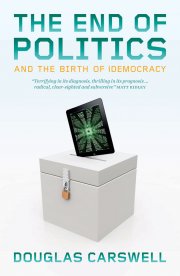
"A revolutionary text ... right up there with the Communist manifesto" - Dominic Lawson, Sunday Times
Printed and promoted by Chris Lowe on behalf of Douglas Carswell, both of 105 Station Road, Clacton-on-Sea, Essex
