TalkCarswell.com
Douglas Carswell's Blog
Are we heading for the rocks?
Westminster is transfixed by the fallout of the ‘phone hacking scandal. I fear that the really serious news is on the economic front.
Forget about which politicians hang out with which media people for a moment. Our closest trading partners are in grave trouble. A number of European countries are on the verge of bankruptcy, their governments having borrowed beyond their means to fund unsustainable welfare programmes. In perhaps weeks, rather than months, the credit carousel will come to a stop, with various EU governments simply unable to pay their bills by borrowing more.
Across the Atlantic, something like $800 Billion has been squandered in an effort to stimulate the US economy, with little besides a credit ratings downgrade to show for it.
Far from saving the world, Western policy-makers have compounded the mistakes they made in the run up to the 2007 credit crunch with a catastrophic borrow-and-bailout splurge. It was supposed to stimulate the economy and allow us to grow our way out of this mess. It was, they told us, necessary to bolster the banks and buy them time to recover. On both counts, it has failed. Entire governments, not just banks, are now on the brink. Some economic cure it's been....
Britain has no cause to feel smug. When we say we have a deficit the size of Portugal’s, but interest rates as low as Germany’s, we imply that we can somehow defy the laws of economic gravity as we run off the edge of a credit cliff. That is the Wile E Coyote approach to economics.
Being outside the Eurozone has spared us from quite the feckless public spending seen in parts of Euroland. Not having Obama as leader means we've not yet managed to blow several years budgets in one. But in more ways than many care to consider, Britain’s economic policy has changed little from the approach that got us into such a mess to start with.
Monetary policy has remained entirely unaltered. Nothing has been done to change the course charted by the Monetary Policy Committee, with their ruinously low interest rates and inflationary print-more-money agenda. We should tighten monetary policy and create incentives for people to save.
Fiscal policy has been adjusted very little, with tax and spending following much the same trajectories that were set by the previous administration. Despite the talk of deficit reduction and cuts, UK public spending, borrowing and taxation are all up. Indeed, the Coalition spent more money in its first year than Gordon Brown did in his last. We should cut public spending and borrowing, rather than just talk about it.
When it comes to bailing out banks and the Eurozone, the current administration has more or less carried on with the policy it inherited. Even now the full folly of the EU/IMFs "more bailouts" policy is becoming apparent, ministers have not yet shown the confidence or courage to advocate a different approach. We should extricate ourselves from the Eurozone debt vortex.
For over a decade, Gordon Brown hosed money at the public sector by signing us up to multi £ billion PFI projects we simply cannot afford. The tap has not yet been turned off, the Treasury continuing to approve a gush of new off-balance sheet spending commitments for the worst kind of Keynesian reasoning. We should halt the haemorrhage of public money on wasteful corporate contracts.
And where is that new "growth agenda"? I don't mean speeches talking about growth. I mean the radical low tax / deregulation programme that would allow more wealth creation? Today – little noticed amongst the hackgate firestorm, Ernst and Young’s Item Club has downgraded their growth forecasts again. We should radically deregulate – and cut taxes on enterprise.
If you are heading for the rocks, it is helpful to change course.

 RSS Feed
The End of Politics and the Birth of iDemocracy
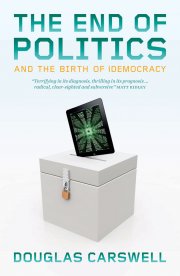
"A revolutionary text ... right up there with the Communist manifesto" - Dominic Lawson, Sunday Times
Printed and promoted by Chris Lowe on behalf of Douglas Carswell, both of 105 Station Road, Clacton-on-Sea, Essex
