TalkCarswell.com
Douglas Carswell's Blog
Banning things seldom safeguards our rights and freedoms
Isn't it ironic that the Protection of Freedoms Bill seems to want to ban things? Banning the state from doing things generally enhances freedom, but banning the public from doing things rarely strengthens our rights and liberties. Amongst other proposals, the Bill wants to outlaw car clamping on private land - something many of my constituents will heartily welcome. Cowboy clamping has been a major problem for many of my constituents. Older people in particular have fallen victim to teams of clampers, who - having obtained the legal say-so from the land owners - then clamp anyone parking on their land. Cars are only released in return for large sums of money.
The clamping scandal is wrong and something needs to be done. But is this Bill the answer?
First of all, fines will still be issued against anyone parking on private land - and I suspect many perfectly innocent shoppers will find they continue to have to pay large sums for momentarily parking on someone else's property.
At the same time, I fear that with clamping banned, I will start to get complaints from residents whose private parking spaces are taken up by those who refuse to play by the rules - and who simply disregard any fines.
It seems to me that the Bill is based on a false premise. It supposes that our freedoms and rights are best enshrined on our behalf by the state, rather than safeguarded by ourselves.
The Bill ignores the fact that the cowboy clampers are only able to clamp cars and extort money because the landowner has sanctioned it. Indeed, I know cases where the clamper has explicitly touted for business by offering landowners a contract in which they agree to divide up the spoils.
Surely there sits the solution?
Why not allow a victim of unreasonable car clamping the ability to sue the pants off a landowner who had sanctioned the clamper? A couple of test cases might soon establish that the landowner was liable. Any agreement reached with clamping firms would be seen as a risk, rather than a dead cert source of profit.
Such an approach would allow courts to define organically in what circumstances it might be reasonable to clamp a car - a privilege that this "Freedom Bill" seems to confer on state officials alone.
But that, of course, would mean making courts accessible to citizens who aren't millionaires or on legal aid. It would mean allowing rights and freedoms to be self-defining, rather than state sanctioned – anathema in this age of state-defined rights.
And that would all take patience and wisdom and carefully formulated public policy. Not surprisingly, our ruling elite find it much easier to just ban things.
blog comments powered by Disqus
 RSS Feed
The End of Politics and the Birth of iDemocracy
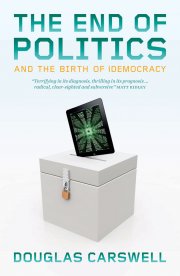
"A revolutionary text ... right up there with the Communist manifesto" - Dominic Lawson, Sunday Times
Printed and promoted by Chris Lowe on behalf of Douglas Carswell, both of 105 Station Road, Clacton-on-Sea, Essex
