Douglas Carswell
Capitalism without the free market allocation of capital.....
It's not just the year that's changed. The New Year economic outlook seems very different, too.
We've gone from gloom in 2013 to boom in 2014. No longer are pundits writing pieces predicting our imminent economic demise. Instead it is all about rising house prices, stronger sales and growth. An extraordinary number of new jobs have been created, and unemployment has fallen to slightly more than seven percent.
Over the next few months, I reckon we are going to see a flurry of good news about the economy. All sorts of forecasts are going to be revised positively.
But a note of caution.
Pundits – like politicians – often have a herd-like mentality. If every other financial journalist is writing about the End of Days, a reporter will be more likely to make the news story they are writing about fit that narrative. And when the herd collectively tires of one particular narrative, they then tend to fit the facts around a new one.
If there was excessive pessimism in 2013, watch out for undue optimism in 2014.
There will, I believe, be a sharp increase in output in the coming months – and all manner of positive economic indicators. But I suspect that neither they, nor the commentariat, will tell us the full story. Headline growth data tells us how much output is expanding. It does not tell us why output is growing.
Output can be boosted by cheap credit and by having government spend more than it takes in tax. Ted Heath's government managed to raise output – and property prices – rather spectacularly in 1971-73. But sustainable growth happens when capital and technological innovation combine to create new and better ways of producing more of what we want.
The good news is that there is plenty of technological innovation out there – from shale gas to driverless cars to new medicines. Not to mention things we have not even yet heard of. My concern is that the partial nationalisation of capital allocation since 2007 will hinder sustainable growth.
We seem to have a capitalist economy, at the heart of which capital is no longer allocated by the free market, but by official fiat. You need to look beyond the headline growth figures to see this, though. So most pundits don't.
Once monetary stimulus is exhausted, I suspect, we are going to need a fundamental rethink of monetary policy. I have a paper on this subject published in mid-January.
 RSS Feed
The End of Politics and the Birth of iDemocracy
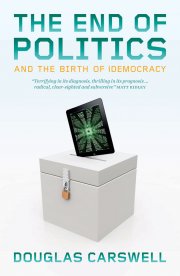
"A revolutionary text ... right up there with the Communist manifesto" - Dominic Lawson, Sunday Times
Printed by Douglas Carswell of 61 Station Road, Clacton-on-Sea, Essex
