Douglas Carswell
Cromwell remembered
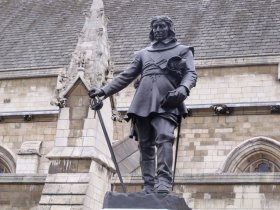 Oliver Cromwell, that great East Anglian, died 363 years ago today.
To many, he was the hero of the English civil war. Thanks to his tenacity, the tyrant Charles I was defeated. Continental-style absolutism was overthrown. The rights of free born Englishmen and women safeguarded.
To others, he was the butcher of Drogheda. A military dictator who savagely crushed those proto libertarians, the Levellers, at Burford church, and in doing so set back the cause of English liberty.
To me, Cromwell is both – and as such, perhaps suggests that we English had our revolution a century too early.
Having defeated absolutism, we had no idea with what we should replace it (as the rather overblown Putney debates rather suggest).
If only we had had our revolution after the works of Polybius had been rediscovered in those dusty archives. Revealing, as they did, the inner workings of the Roman republic, they showed us how power might be constrained. It is no coincidence that when our American cousins had their revolution a century later, they therefore created a Senate and built a Capitol on the banks of the Potomac.
In Cromwell's time, we had no such example to guide us. So we lapsed back into despotism. Until of course, in 1688 we hit upon the idea of restraining the monarchy by putting a Dutch variety on the throne. Which worked. Sort of.
Perhaps if the works of Polybius had been rediscovered before the civil war we might now have a consul or two in Downing Street instead. And more constraints on sofa government. Or may be not.
Anyhow, spare a thought for Cromwell today. Hero or tyrannt, I hope you will agree that we still need to find better ways of holding those with power to account.
 RSS Feed
The End of Politics and the Birth of iDemocracy
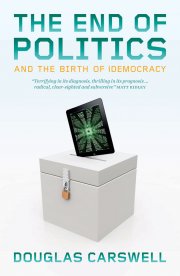
"A revolutionary text ... right up there with the Communist manifesto" - Dominic Lawson, Sunday Times
Printed by Douglas Carswell of 61 Station Road, Clacton-on-Sea, Essex
