TalkCarswell.com
Douglas Carswell's Blog
Do ministers run the Treasury or does the Treasury run ministers?
What do the so-called “pasty tax”, “granny tax”, child benefit cliff edge and the reduction in tax breaks for charitable giving all have in common?
They were all in the budget, right? Yes. But they have something else in common, too.
According to an ex-Treasury special adviser I’ve been speaking to, these measures were precisely the kind of perennial proposals that top Treasury officials would put in front of ministers – and ministers would then veto. Until now.
Take the idea that people on high incomes should lose their child benefit. Treasury officials have been floating this idea for over thirty years. It is only now, it seems, that ministers seem to have at last said “okay” – to this, and many of the other perennial proposals.
My bet is that these measures were thought up by, and are the work of, unelected mandarins, not ministers - like much of the rest of the budget, infact. I write this not to pass any buck, but to point out that those we elect no longer seem to make policy the way we often suppose.
A few generations back, Treasury ministers tended to write a lot of the budget themselves – often quite literally doing the maths. Today, it seems that the budget process is dominated by the Sir Humphrey-types, who present ministers with a menu of “either / or” policy options. Stale ideas get re-cycled. Bold ideas left out altogether. Little scope for original thought.
If you are only prepared to contemplate what Sir Humphrey puts in front of you, you are pretty much guaranteed never to be bold.
Perhaps this needs to change if Britain is to have the kind of reforms that we need to get our economy moving once again?
blog comments powered by Disqus
 RSS Feed
The End of Politics and the Birth of iDemocracy
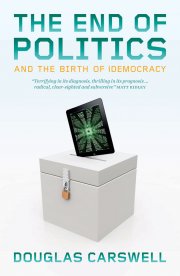
"A revolutionary text ... right up there with the Communist manifesto" - Dominic Lawson, Sunday Times
Printed and promoted by Chris Lowe on behalf of Douglas Carswell, both of 105 Station Road, Clacton-on-Sea, Essex
