Douglas Carswell
I don't miss the party whips
 I gave up going to Conservative party conferences several years ago. Why? There never seemed to be many Conservatives. The lobbyists outnumber the activists. The fringe debates seemed so sterile.
Compare that to what I found at UKIP's gathering in Doncaster. There was a real buzz. Supporters from all over the country, and all kinds of backgrounds, were genuinely enjoying each other's company. New friendships were being formed all around me. Not a lobbyist in sight.
--
"What do you think of Grant Shapps?" asked a journalist, hoping I might say something rude. I like him, and I've made no secret of my admiration of him in the past. If he has had to say some fairly strong things as Conservative party chairman over the past few days, he is doing it because he is Conservative party chairman.
I know Grant is a thoroughly decent person and have always enjoyed his company. I might have changed parties, but I'm not going start pretending that everyone that wears a blue rosette is bad. Grant is one of the good guys.
--
Government used to be accountable to Parliament, and Parliament once answered to the people. Slowly but surely this has changed.
MPs have lost the power to amend budgets or meaningfully control what ministers do with our money. The executive controls the legislature, rather than the other way round. Political parties have "safe seats", which they treat as fiefdoms to reward A listers and insiders.
The result is that we are governed by tiny cliques, each competing to sit on the sofa in Downing Street – and none of them much in tune with the country over which they preside.
Not so very long ago, to make such observations might have seemed a little wonky or obtuse. Dissatisfaction with the way Westminster works – or fails to work – is now so widespread, even Westminster is waking up to it.
--
Each week, as a constituency MP, I would pick a couple of streets at random – and go and knock on the doors.
"Hello. I'm Douglas, your MP" I'd say. "I'm in the neighbourhood and wanted to introduce myself". I got to make a lot of new friends and drink an awful lot of tea.
During this by-election I've been knocking on many of the same doors again. I've had to say many a polite "no" to tea this time, but the friends are still there.
The internet and iDemocracy will overturn many of our assumptions about politics. But not perhaps the way some pundits imagine.
--
A big part of the problem with Westminster is the whipping system. Party whips hold far too much power. Instead of answering to the electorate, too many MPs end up answering to whips.
Whips are able to influence MPs in all sorts of ways. But their power stems from their one ultimate sanction; they can withdraw the whip.
Withdrawing the whip from an MP means, in effect, that the MP has been sacked. Unless they grovel, they are out and cannot run as a party candidate again.
What if instead of whips being able to sack MPs, MPs were able to sack their whips?
 RSS Feed
The End of Politics and the Birth of iDemocracy
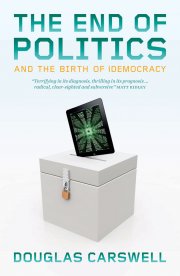
"A revolutionary text ... right up there with the Communist manifesto" - Dominic Lawson, Sunday Times
Printed by Douglas Carswell of 61 Station Road, Clacton-on-Sea, Essex
