Douglas Carswell
Influence or outcomes?
"I have no romantic attachment to the European Union," David Cameron claimed today. "I'm only interested in two things: Britain's prosperity and Britain's influence."
Sounds sensible, doesn't it?
When ministers talk about wielding influence in Europe, it sounds as if they mean the attainment of defined objectives. In reality it means something rather different. Influence really means the ability to lobby the EU machine, rather than necessarily get the things we want.
Take for example the PM's claim to be the driving force behind the Transatlantic Trade and Investment Partnership. If Britain really wanted free trade with the United States, we could have it – if we had control over our own trade policy.
But we don't. Europe decides for us. So we are left lobbying Brussels to get the kind of deal that we want – and when it kind of begins to get us where we want to be, we claim we have influence.
Doing trade deals as part of the EU means, of course, that the deal making takes much longer. Not only do we have to try to square the interests of Italian shoemakers or Spanish textile companies. By doing a Single Market type trade deal with the US, we end up not actually striking a free trade agreement at all, but negotiating a permission-based trade deal.
Firms in the UK won't be able to produce and sell goods freely to America – and vice versa. Firms will only be able to produce and sell if they do so in compliance with standardised regulations drawn up at the behest of lobbyists.
Influence? I can see why lobbyists might like it, but not the rest of us.
Instead of seeking influence over how we are governed, it would be nice to have a Prime Minister who actually governed.
 RSS Feed
The End of Politics and the Birth of iDemocracy
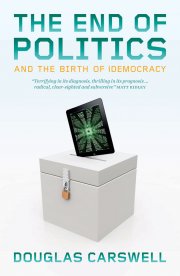
"A revolutionary text ... right up there with the Communist manifesto" - Dominic Lawson, Sunday Times
Printed by Douglas Carswell of 61 Station Road, Clacton-on-Sea, Essex
