TalkCarswell.com
Douglas Carswell's Blog
Internet makes MPs more accountable
 Digital technology is closing the gap between the governed and the governing.
It's not just that we have access to the same information. Politicians have become more accessible.
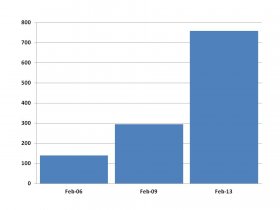
As an Essex MP, I've seen this first hand. This graph shows the number of individual constituency cases I dealt with in February this year, compared to February 2009 and February 2006. Click here to see full detail.
The number of individual cases roughly doubled, and then doubled again. (Bear in mind that the amount of work each case generates varies widely, and has probably not risen as fast. Trying to get a pothole filled is generally straight forward. An adoption case can be vastly complex and drawn out.)
I point this out not to complain – it is a very good thing that more voters are asking more from their MPs. Rather, I mention this to illustrate how blogs and email mean more people are coming into contact with their representatives. Social media means that that contact can be on-going.
Professional politicos like to use opinion polls and focus groups. Why? They, perhaps rightly, feel that they need solid, empirical evidence as to what voters think.
But pollsters trying to measure what people think will usually quiz a sample of around a thousand people. Which is not far off the number of folk that many constituency MPs now help every six weeks or so.
Perhaps this will ensure more of those in SW1 are more in tune with what people want - and less deferential to those polling gurus who claim to be able to read the tea leaves.....
I will be giving a talk about all this to some MA Broadcast Journalism students at City University later today.
blog comments powered by Disqus
 RSS Feed
The End of Politics and the Birth of iDemocracy
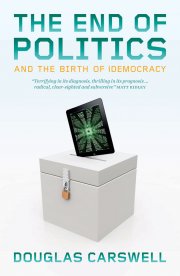
"A revolutionary text ... right up there with the Communist manifesto" - Dominic Lawson, Sunday Times
Printed and promoted by Chris Lowe on behalf of Douglas Carswell, both of 105 Station Road, Clacton-on-Sea, Essex
