TalkCarswell.com
Douglas Carswell's Blog
Learning from Obama online
 Later today I'll be taking a break from pushing leaflets through letter boxes to meet with Harper Reed, Barack Obama's chief technology guy.
As each of us spends more time online, doing more things, the ability to aggregate opinion and votes online grows too. Reed understands this rather brilliantly - in a way almost no one in Westminster yet grasps.
Too many Tories seem to believe that digital campaigning is about doing online the stuff they are used to doing off line. It's isn't.
A digitally savvy party would look through Google word search data to assess where the threat from UKIP was likely to be strongest. Or where concerns about the "bedroom tax" were greatest.
Or they'd use it to assess which of their incumbent MPs had strong local profiles - and which did not.
Or they might aim to increase party membership by targeting some of the 250,000 plus self-proclaimed conservatives on Twitter and Facebook.
Sometimes when I hear the words "digital" and "campaign", I fear I'm listening to a snake oil salesman with a twitter account. But those who really get this interweb thingy are going to be transformative.
The web is not a substitute to off line campaigning. It can bring off line politics back to life.
But to do that, established parties need to redefine themselves, adopt a new concept of membership and change the notion of who has control.
blog comments powered by Disqus
 RSS Feed
The End of Politics and the Birth of iDemocracy
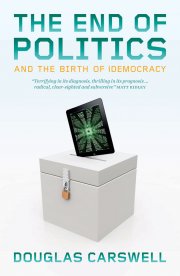
"A revolutionary text ... right up there with the Communist manifesto" - Dominic Lawson, Sunday Times
Printed and promoted by Chris Lowe on behalf of Douglas Carswell, both of 105 Station Road, Clacton-on-Sea, Essex
