Douglas Carswell
Portugal's EU Coup
Earlier this month, the Portuguese people voted to kick the government out. The centre-right, pro-Euro-austerity coalition lost its absolute majority in parliament. The Socialist opposition agreed to form a majority coalition with radical left-wing parties, on a democratic mandate to reject the austerity measures imposed by the EU and the IMF. But last week the Portuguese President promised to do everything in his power to prevent the elected majority taking office.
Why is he overruling the people? Because the EU doesn't like their choice. "Never in 40 years of democracy," the President said, "have the governments in Portugal relied on the support of anti-European political forces."
Sound familiar? It's the classic EU approach to democracy. If the people give the answer you don't want, ignore the people. Portugal was the backdrop for the EU's last undemocratic coup, when the Lisbon Treaty brought in the EU constitution rejected in referenda by the peoples of Europe. Eight years on, the EU is denying democracy in Lisbon again.
But the fact that this latest EU coup is happening in Portugal is especially distressing – and not just because she is the UK's oldest ally. Portugal joined the EU only fifteen years after the end of Salazar's dictatorship, on the promise that the European project would help consolidate democracy. Now we know how hollow that promise was.
Don't get me wrong: I'm no fan of Communists in government either. No ideology has been more destructive over the past century. And the idea that governments can ignore fiscal reality and spend money they don't have is madness. But thwarting the democratic will of the people isn't the solution to the rise of left-wing radicalism; it's the cause.
Across Europe, Eurosceptic parties are gaining support as people realise that they are being ruled by a new oligarchy. The recent elections in Poland and Portugal have produced polar opposite results, but they have one thing in common: both reject the federalist agenda of Europe's political Establishment.
Doubt what's happening in Portugal is an Establishment stitch-up? Portugal's current pro-EU president – Anibal Cacavo Silva – was the prime minister who took the country into the EEC thirty years ago. One of his successors as PM – Jose Manuel Barroso – later became President of the European Commission. Portugal's political class has long relied on Brussels as its core constituency.
The Euro Establishment thinks it can continue to rule the nation states of Europe like fiefdoms. It is blind to the lessons of history. Reactionary, centralised, undemocratic regimes in Europe met with popular revolts in 1789, 1830, 1848, and 1917. Britain avoided this fate by recognising that the status quo was untenable, and liberalising. Yet the EU thinks it can get away with not only ignoring the people, but centralising even more.
We need a new model for Europe - based on peace, friendship, and free trade between independent nation states. We need to end neo-oligarchic government from Brussels. We need to vote leave, and take control.
 RSS Feed
The End of Politics and the Birth of iDemocracy
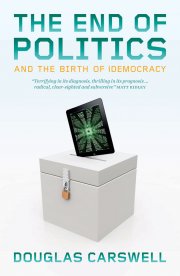
"A revolutionary text ... right up there with the Communist manifesto" - Dominic Lawson, Sunday Times
Printed by Douglas Carswell of 61 Station Road, Clacton-on-Sea, Essex
