TalkCarswell.com
Douglas Carswell's Blog
Should government centralise the way it buys things?
According to the FT, Francis Maude wants to change the public procurement process. He’d like suppliers to deal with central government as a whole, rather than with individual departments.
We urgently need to ensure that we get better value for money from suppliers. But is scaling up the procurement process through centralised purchasing the answer?
Scaling up procurement means that only big contractors can supply (see Building Schools for the Future as a classic example). While big suppliers can give you the advantages of economies of scale, it can also mean that the range of suppliers is constrained.
And as we know from the history of defence procurement, for example, when you constrain the range of suppliers in a given market, the seller ends up setting the terms of trade. Whitehall officials then end up deciding what constitutes cost.
It is tempting to think that because businesses can benefit from bulk procurement, government must be able to as well. When things go right, it can. However, if it simply erects barriers to entry against potential new suppliers, it won’t. And because public administration does not face the kind of pressure that competition puts on business, we might not be able to do much about it.
blog comments powered by Disqus
 RSS Feed
The End of Politics and the Birth of iDemocracy
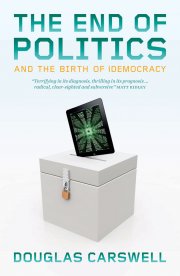
"A revolutionary text ... right up there with the Communist manifesto" - Dominic Lawson, Sunday Times
Printed and promoted by Chris Lowe on behalf of Douglas Carswell, both of 105 Station Road, Clacton-on-Sea, Essex
