Douglas Carswell
Social media is changing the way we see strikes
If you think the London tube strike has caused chaos and misery, imagine what things must have been like for our grandparents in the 1970s. Back then so many days were lost to strikes nationally it caused huge scale economic disruption.
Yesterday, as I loitered with a zillion others waiting for a bus that wasn't full, I wondered if our attitude to industrial (in) action might have changed? Back in 1970 something, I imagine many more folk were ambivalent about strikers.
Not in my bus queue, they weren't. Bob Crow, I reckon, must be about the most unpopular man in London and the Home Counties right now.
What's changed?
A generation ago, when a strike caused personal inconvenience, it remained largely personal. Sure, one might tell co-workers and friends about the freezing bus stop. But it was much less a collective experience.
Back then, it was the unions that did collectivism. The poor, frozen punter just had to get on with it.
Now of course we have Twitter and smartphones. Everyone in that bus queue seemed to be bleeping and tweeting. Their personal experience as a victim of the strike was shared far more widely. Those individual grains of grumbling coalescing into a more widely shared public opinion.
No longer each in our own atomised little world, patronised by the mainstream media and told what to think, we can see what an appalling effect the strike is having. We can read on our smartphones that we are not alone in feeling cross about it. So our expectations change. We start to ask the questions that the pundits never seem to ask, like "how dare they."
In the 1970s, leftie unions did collectivism. Digital means we all will. Citizen consumers, not organised labour, will be the decisive force in politics in the future.
 RSS Feed
The End of Politics and the Birth of iDemocracy
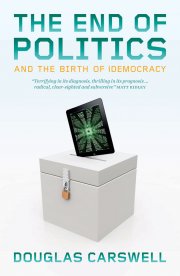
"A revolutionary text ... right up there with the Communist manifesto" - Dominic Lawson, Sunday Times
Printed by Douglas Carswell of 61 Station Road, Clacton-on-Sea, Essex
