Douglas Carswell
Sound Money
Sound money. Now that's a term you might not have heard for a while. That's because we've not had it for many years.
Hats off to Liam Fox for putting the subject of how we manage our money on to the political agenda with a talk at the Institute of Economic Affairs.
For years, the Osbrown economic orthodoxy has engaged in a policy of print-money-and-pray.
Facing a fall in the economy's output? Throw lots of cheap credit and hope people start buying stuff. Tank the banks? Don't worry, hose them with money that you conjured out of thin air, and hope they start lending.
To every economic problem the Osbrown consensus has been easy money.
"But" I hear you say "those central bankers must have been doing okay. There's been no inflation"
Really? I'd say there has been the most enormous inflation of asset prices. Houses, shares and other assets classes have rocketed in value.
The reason why consumer goods have not shot up in price has little to do with central bankers. The addition of millions of extra workers to the globalised economy in China, Eastern Europe and elsewhere has kept consumer good prices down.
The single biggest driver of income inequality in Britain today is a monetary regime that drives up the value of the assets of the haves, yet does little to secure the economic security of the have nots.
For too long all establishment partied in Westminster went along with the Osbrown insanity. Today I hope they are starting to consider the alternatives.
I set out my post Osbrown ideas in this paper.

 RSS Feed
The End of Politics and the Birth of iDemocracy
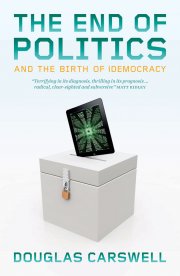
"A revolutionary text ... right up there with the Communist manifesto" - Dominic Lawson, Sunday Times
Printed by Douglas Carswell of 61 Station Road, Clacton-on-Sea, Essex
