Douglas Carswell
The CPS needs to stop prosecuting its ridiculous agenda, and start prosecuting criminals

Back to the Future II was right about 2015. We may not have all the high-tech gadgets it predicted, but we do have innovations beyond the wildest imaginations of even Hollywood executives 30 years ago – from smart phones to 3D printers. In fact, the film only got one thing wrong: the 21st-century, technocratic State won't let us use them.
If Marty McFly tried to use his hoverboard in London today, he would be stopped by the police. According to the Crown Prosecution Service, "self-balancing scooters" are illegal to ride anywhere in public. In fact, the CPS deems hoverboarding on the pavement "an offence under Section 72 of the Highway Act 1835" – a law which predates the invention of the bicycle.
As Boris Johnson says, banning hoverboards while permitting mobility scooters is absurd. In fact, so the Mayor tells us, this ban is so preposterous that even TfL "experts" – no strangers to banning new technology – recognise it.
But the real issue is not with the ban itself but the people issuing it. In 1835, traffic law was made by elected legislators in Parliament. How did we end up giving the power to make our laws to unelected bureaucrats in an unaccountable government agency?
The CPS was founded in 1986 with one purpose: to bring criminals to justice. In my constituency, it's doing a pretty shoddy job – and it's no different elsewhere. Research by Policy Exchange in 2012 found that the CPS won barely half of its prosecutions in court, yet refused to bring charges against actual criminals – like the 2011 rioters – for fear of criminalising them!
Instead of applying the law, the CPS consistently spends its time trying to make it.
Earlier this year, the CPS blocked a private prosecution against gender abortion on the grounds that it "wasn't in the public interest." Since when does a quangocrat cartel speak for the public?
Six years ago, CPS head Keir Starmer – now a left-wing Labour MP – tried to change the law on assisted suicide, despite Parliament explicitly refusing to do so. At least he ultimately stood for election to push his agenda.
There is only one way to have an accountable, efficient public prosecution service – and that is to elect local public prosecutors.
There is also only one way for the law to reflect the public interest – and that is for elected lawmakers in Parliament to legislate. We knew that in 1835. It's about time we went back to the future.

 RSS Feed
The End of Politics and the Birth of iDemocracy
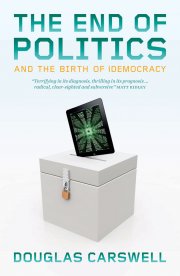
"A revolutionary text ... right up there with the Communist manifesto" - Dominic Lawson, Sunday Times
Printed by Douglas Carswell of 61 Station Road, Clacton-on-Sea, Essex
