Douglas Carswell
The jihadist threat blurs defence and security. Will the SDSR reflect that?
Next week, the Government will publish its Strategic Defence and Security Review. The Paris attacks are a reminder that external defence and internal security can no longer be considered separate.
We think of national defence in terms of standing armies, air bases, and battleships. It is a structure that hasn't changed for as long as anyone can remember.
But as last week's attacks testify, the threat we face has changed. Since September 11th, the main danger to citizens of Western countries has been groups of terrorists with links to a global jihadist network. A handful of jihadis travelling through Europe can now threaten Western capitals more immediately than any hostile standing army.
At the same time, jihadist groups have carved out territory in failed states. Recruits are drawn from countries all over the world using social media. Most major conflict is no longer between states, but pits a state against jihadist groups, or jihadist groups against each other. Unconventional warfare has become conventional.
The change in the threat needs to change our assumptions about strategy. We probably can no longer look at our armed forces and our security services as separate. When IS and other jihadists work as united actors across borders, our defence services cannot make a distinction either.
We also have to be able to adapt quickly. Less time passed between the last British cavalry charge at Omdurman, Sudan and the first British tank charge in World War I than has now elapsed between the collapse of the Soviet bloc and today. Yet in our generation we have not been nimble enough in refocusing and adapting - not just our equipment, but our tactics and strategy.
Power projection remains necessary. We still need fast jets to target threats abroad. But fast jets wouldn't be much use against gunmen on the streets of London. It would be a mistake to privilege one weapon in our armoury over others. We can't be stuck with cavalry when our enemies are advancing in tanks. We mustn't end up trying to fight today's threats with yesterday's technology.
New threats require a new approach. Adaptive change is our ally in preserving our security; we cannot be afraid of it. I hope that will be reflected in the SDSR.

 RSS Feed
The End of Politics and the Birth of iDemocracy
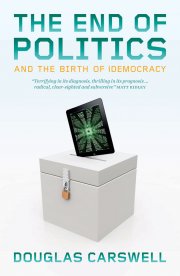
"A revolutionary text ... right up there with the Communist manifesto" - Dominic Lawson, Sunday Times
Printed by Douglas Carswell of 61 Station Road, Clacton-on-Sea, Essex
