TalkCarswell.com
Douglas Carswell's Blog
The trouble with leaving it to the experts
The BBC’s Robert Peston latest blog seems to suggest that politicians should hand over their power to oversee media regulation to state-regulator, OFCOM. Instead of those we elect deciding things, Mr Peston appears to want “the regulator’s word” made final, “politicians wholly removed from the decision-making process”.
Superficially attractive, perhaps. Yet what happens if the judgement of experts turns out to be flawed?
Pick one example the BBC’s business editor might be familiar with; 14 years ago, politicians handed over the power to set interest rates to a regulator – the Monetary Policy Committee (MPC). Politicians were "wholly removed from the decision-making process".
So, what happened next? Brilliant stewardship of monetary policy? No. Instead the MPC set interest rates far too low, for too long. The result was a spectacular credit boom – followed by credit crunch.
Precisely because they’re cut off from public scrutiny, rather than correct their mistake, the MPC has been free to compound it. The price of credit kept so low, there's little credit.
By all means let’s have less state-regulation – but if the state has to set interest rates or media ownership rules, those who make the decision must be publicly answerable.
If Robert Peston wants to see what is wrong with leaving things to experts, he need look no further than at how the MPC has set interest rates. As of today, they are at least 100 percent off their own inflation target. Why might state regulators be any better at deciding the shape of the media industry?

 RSS Feed
The End of Politics and the Birth of iDemocracy
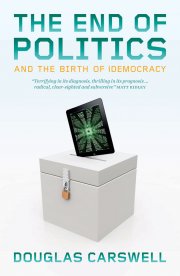
"A revolutionary text ... right up there with the Communist manifesto" - Dominic Lawson, Sunday Times
Printed and promoted by Chris Lowe on behalf of Douglas Carswell, both of 105 Station Road, Clacton-on-Sea, Essex
