TalkCarswell.com
Douglas Carswell's Blog
Was Natan Sharansky right afterall?
Watching the popular uprising against tyranny in Tunisia, I wonder if those "neo-Cons" who argued that the West should try to expand democracy might have been right all along?
Around the time of the US-led invasion of Iraq, I read a book by Natan Sharansky called "The Case for Democracy". Briefly fashionable, Sharansky's book was in effect a foreign policy manifesto for the West. In it, he argued that the overarching policy objective for the US, Britain and the West should be the expansion of democracy.
Unsure if Sharansky is right, I can't help notice that in an ever more digital world, power and ideas seem increasingly dispersed - not just in the democratic West. Like the arrival of the printing press in Europe, the effect will be to redistribute power away from elites toward the people.
More recently it has become fashionable in political circles to sneer at the kind of ideas Sharansky advocates; "We need realpolitik not idealism", "Better to have dictators than mullahs in charge", "Nothing inevitable about democracy blah blah blah".
It seems they forgot to tell the crowd in Tunis. And Cairo, and Damascus, and Tehran...
blog comments powered by Disqus
 RSS Feed
The End of Politics and the Birth of iDemocracy
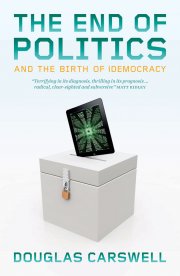
"A revolutionary text ... right up there with the Communist manifesto" - Dominic Lawson, Sunday Times
Printed and promoted by Chris Lowe on behalf of Douglas Carswell, both of 105 Station Road, Clacton-on-Sea, Essex
