Douglas Carswell
What is the point of the G20?
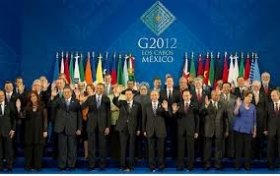 It started as the G6. Back in 1970-something, finance ministers from the world's six leading economies – France, Germany, Italy, Japan, the US and the UK – got together to talk.
They had, one might imagine, quite a bit to discuss. There were oil shocks to contend with. Post-Bretton Woods, how were they to manage the money?
And back then, of course, those six Western players, were – economically speaking – it. The West accounted for almost 60 percent of global GDP.
Things have changed a little since.
By 2003, the West's share of global output had fallen to less half. By 2030, it is forecast to be about a third.
Already, Italy no longer makes it into the top six. Another decade of Euro-sclerosis, and only America and Japan would qualify from the original guest list.
So to keep everyone on board, in the late Nineties they came up with the G20, which meets this week in Australia. (Who knows, by 2040 they might be calling it the G80 so France can still make the list. Squeeze 'em in beside Burkina Faso.)
Apart from allowing politicians to feel important, what is the G20 actually for? Other than posing for group photos (and the occasional selfie), what do they actually do? Isn't this all just politics tourism for the sort of people who all met up in Davos the other week?
According to initial reports, the G20 finance ministers meeting in Sydney have decided that they will be adding $2 trillion (£1.2 trillion) of extra growth to the world economy. If it really was as easy as all that, why not an extra $4 trillion?
Over the two days of the G20 meeting, I cannot imagine that finance ministers from, say South Korea, South Africa and Russia, can do much besides talk generalities. Stand by for communiqués ladened with clichés. So why do they do it?
It is hardly as if these international shindigs have produced any good ideas I can think of.
International bank reform? Six years on from Lehman's bankruptcy, we've still not seen significant changes.
Advances in free trade? For all the talk, things seem to have become bogged down in corporatist quota setting, masquerading as free trade agreements.
Coordinated monetary policy and exchange rate management? When five of the G6 finance ministers agreed at the Plaza Hotel in New York in 1985 to manipulate exchange rates, it had some pretty disastrous unintended consequences. Heaven forbid anyone try that again.
Far from leading to better global governance, I fear that these get-togethers reinforce groupthink.
Perhaps what really makes ministers keep coming is the badge of respectability they feel it gives them. A kind of peer approval. And, of course, an army of diplomats and officials, each with careers and departmental budgets invested in such supra-national summits.
 RSS Feed
The End of Politics and the Birth of iDemocracy
"A revolutionary text ... right up there with the Communist manifesto" - Dominic Lawson, Sunday Times
Printed by Douglas Carswell of 61 Station Road, Clacton-on-Sea, Essex
