Douglas Carswell
What kind of immigration system would we decide to have outside the EU?
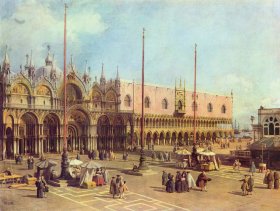 What do 12th-century Venice, 17th-century Amsterdam and contemporary California all have in common?
They each in turn blossomed, becoming centers of innovation, enterprise and wealth creation. More than that, like a flower that draws bees, so too did each of these centers of human ingenuity attract many of the brightest and best humans. They attracted immigrants because they grew, and they grew because they attracted immigrants.
What would Venice, a mud bank in the Adriatic, have been without all those people, drawn from every corner of the Mediterranean, who thronged her cramped piazzas? Amsterdam, bereft of natural resources, grew because of those human resources from all over Europe that made her damp streets their home.
Sunny California's universities are today full of bright students from Asia, the Middle East and Europe. Silicon Valley teems with startups started by people who were not born in California.
Immigration that draws in the brightest and the best produces prosperity. But not all immigration does so.
For several years, Britain has had what one might call a "productivity puzzle". While economic output has remained fairly static, the number of jobs has grown rapidly. In other words, there are lots more people working, but together we are still producing about the same amount. Productivity has fallen.
Why?
Perhaps it is because we are all spending too much time on Facebook, when we ought to be working in the office? Some economists have suggested that productivity only appears to be
falling because the GDP data is dodgy.
But here's a thought. What if part (I emphasise the word "part") of the explanation was due to
the kind of immigration we have had? What if, instead of mathematicians, medics and wannabe dot com entrepreneurs, we have been attracting those with relatively low skills? I do not know for sure.
What I do know is that Switzerland today is full of migrant workers, and much better off because of it. An extraordinary one in five of the work force is non-Swiss. Rather like
the Venetians, the Dutch and the Californians, the Swiss draw in the brightest and the best – and those with skills that are needed.
Of course, the Swiss are able to do so because they have control over their own borders by virtue of being outside the EU. Once we have left the EU, we could do so, too.

 RSS Feed
The End of Politics and the Birth of iDemocracy

"A revolutionary text ... right up there with the Communist manifesto" - Dominic Lawson, Sunday Times
Printed by Douglas Carswell of 61 Station Road, Clacton-on-Sea, Essex
