TalkCarswell.com
Douglas Carswell's Blog
Who owns the money in your bank account? You or the bank?
 When Northern Rock went bust, those with shares in the business lost out, but those with deposits didn't. What shocked many about more recent bank failures in Cyprus is that it wasn't only those who owned equity that took a hit. Depositors did so, too.
As Liam Halligan puts it, "depositors are not bondholders ... depositors put their money in a bank, at a lower rate of return, precisely to keep it safe".
Do they? And what precisely is the legal status of money that you pay into a bank for safe keeping?
Is it a deposit or a loan? Do you own the money sitting in your current account, or does the bank?
Legally, you do not own the money that you pay into your bank. You merely have a legal claim to it. Despite you – and every other customer – thinking that what you pay in is a deposit, the bank treats it like a loan.
Which is how the bank is able to lend "your money" several times over, creating credit from nothing. Which is, in turn, why when everyone stands outside the bank and asks for their money back – a la Cyprus – it isn't there.
Unchecked, this system of fractional reserve banking spells trouble. Not only does it mean depositors stand to lose all their savings. In the boom years, it means a glut of candy floss credit. The lesson of the banking crisis is that this credit-out-of-thin-air system of banking is not compatible with free market capitalism. If we want to preserve the later, we must reform the former.
To try to do precisely this, various schemes have been tried - Basel rules, deposit insurance schemes, more compliance and red tape etc. The trouble is that none of them really work.
Now is the time to consider a much simpler way of reining in the worst excesses of fractional reserve banking. The solution? A simple legal distinction between money paid into a bank as a deposit and money paid in as a loan.
As I explained when presenting my bank reform Bill to the House of Commons, creating such a legal distinction would not only safeguard bank deposits. It would organically determine each banks capital reserve ratios.
You almost have to be a government expert on banking not to see straight forward logic of it.
blog comments powered by Disqus
 RSS Feed
The End of Politics and the Birth of iDemocracy
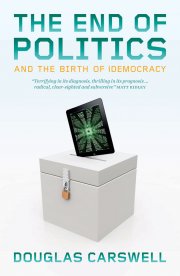
"A revolutionary text ... right up there with the Communist manifesto" - Dominic Lawson, Sunday Times
Printed and promoted by Chris Lowe on behalf of Douglas Carswell, both of 105 Station Road, Clacton-on-Sea, Essex
